Fishing Hotspots: How to Use Your Fish Finder to Find the Best Locations
The capability of a fish finder can completely change an angler's experience. Through precise fish detection and recognition of underwater formations, it greatly improves the overall fishing adventure. Knowing how to read sonar data and make use of GPS capabilities is essential. However, numerous anglers continue to miss the finer details that can make all the difference. The road to fully utilizing these instruments and finding the top fishing spots originates from a handful of fundamental techniques. What are the most important factors to consider?
The Reasons a Fish Finder Is Vital for Every Angler
Numerous fishing enthusiasts recognize that employing a fish finder considerably elevates their angling experience. This technology allows them to identify underwater structures, depth changes, and fish populations, greatly increasing their chances of a successful catch. By delivering real-time information, fish finders enable anglers to efficiently navigate various water bodies, identifying hotspots that would otherwise go unnoticed.
Furthermore, fish finders typically come loaded with tools such as GPS mapping, which allows fishermen to monitor successful fishing spots for upcoming outings. The option to observe the underwater environment assists in determining fish habits and dietary tendencies, enabling fishermen to more effectively select appropriate baits and techniques.
Essentially, a fish finder converts fishing from pure chance into a strategic pursuit, furnishing anglers with the tools necessary to make well-considered judgments. Therefore, it is a valuable investment for both novice and seasoned fishermen regardless of experience, boosting overall fulfillment and results on the water.
Grasping the Fundamentals of Fish Finders
While fish finders may seem complex at first glance, grasping their fundamental components and capabilities is essential for getting the most out of them. At the core, a fish finder is composed of a transducer, which emits sonar waves into the water, along with a display screen that reads the returning data. The transducer projects acoustic waves that ricochet off submerged objects, including fish, structure, and the seabed.
The signals travel back to the transducer, delivering data that is shown visually on the monitor. This enables fishermen to determine fish positions, depth, and subsurface structures. The clarity of this information depends on factors such as the frequency of the sonar waves and the quality of the device. Moreover, learning how to analyze the presented data plays a key role in productive fishing. Familiarity with these basic elements empowers anglers to make informed decisions, enhancing their fishing experience and success on the water.
Important Features of a Fish Finder
Recognizing the essential features of fish finders establishes the foundation for appreciating their main functions. Central to these units is the sonar technology, which uses audio signals to locate aquatic objects, including aquatic life and structures. The screen is a further key feature, presenting visual representation of the sonar data, commonly equipped with configurable options for precision and detail.
Transducer units, designed for emitting and capturing acoustic signals, differ in beam angle and frequency, impacting coverage area and detection capabilities. GPS functionality expands capabilities by permitting anglers to save and return to particular fishing locations. Moreover, capabilities including chart mapping and depth alerts support an enhanced fishing experience.
Ultimately, combining these features enables anglers to locate and target fish more effectively, improving their likelihood of a productive fishing trip. Understanding these key aspects empowers users to make informed decisions when selecting a fish finder.
How to Adjust Your Fish Finder Settings
Adjusting fishfinder settings can considerably boost an angler's ability to identify fish and underwater formations. To achieve this, anglers should start by modifying the sensitivity settings. A higher sensitivity setting can reveal more details, while decreased sensitivity minimizes interference. Furthermore, the frequency setting is essential; higher frequencies offer clearer detail in shallow areas, whereas lower frequencies are better suited for deeper waters.
Adjusting the transducer's cone angle also has a substantial impact. A larger cone angle offers a greater range of visibility, but may sacrifice detail, while a narrower angle ensures focused detail in designated zones.
Additionally, toggling between viewing modes, such as downward imaging or lateral imaging, can assist in visualizing underwater environments with greater accuracy. Finally, regularly calibrating the fishfinder guarantees top performance. By optimizing these settings, anglers can greatly improve their success in finding fish and improving their overall fishing experience.
Interpreting Fish Finder Readings
Deciphering fish finder readings requires a solid understanding of sonar technology, as it is the core of these instruments. Recognizing fish symbols and comprehending depth indicators are vital for productive fishing methods. This knowledge enables anglers to form educated decisions about where to place their lines.
Understanding Sonar Technology
As anglers delve into the world of fishfinders, mastering the fundamentals of sonar technology becomes essential for productive fishing excursions. Sonar, an acronym for Sound Navigation and Ranging, uses sound waves to locate targets underwater. Fishfinders send out sound pulses that propagate through water, reflecting off objects like fish, rocks, and the seabed. The device then processes these echoes, displaying them as visual data on a screen. Knowing the difference between standard 2D sonar and advanced CHIRP technology can enhance an angler's capacity to locating fish more effectively. By assessing the depth, size, and density of these echoes, anglers can more efficiently organize their fishing efforts, leading to a more rewarding experience on the water.
Spotting Fish Symbols
How can anglers effectively identify fish symbols on their fish finders? Understanding the various representations on the screen is essential for successful fishing. Fish finders typically display fish as symbols or icons, often resembling arcs or fish shapes, which indicate the presence of fish in the water column. Fishermen need to understand that these icons differ depending on the make and configuration of the fish finder. The scale and shade of the symbols can deliver extra details; symbols of greater size may point to fish of larger proportions. Additionally, distinguishing between baitfish and game fish is important. By interpreting these symbols accurately, anglers can enhance their chances of targeting the right species in their preferred fishing hotspots.
Indicators of Reading Depth
Recognizing fish markers on a fish finder offers a reliable foundation for interpreting depth indicators. These readings display the underwater environment and water column, essential for finding fish. Depth readings typically appear in meters or feet, enabling anglers to gauge how deep they are casting. A consistent depth can signal favorable fishing grounds, while abrupt shifts may suggest underwater structures, such as submerged rocks or drop-offs, that attract fish. Anglers should also be aware of the brightness and depth of the signals; more vivid colors often signify denser objects, like fish clusters. Understanding these patterns allows anglers to make learn here informed decisions about the best casting locations, improving their likelihood of catching fish.
Discovering Hotspots With Your Fish Finder
Although many fishermen depend on intuition and expertise to find fish, employing a fish finder can considerably boost their capability to locate prime fishing areas. A fish finder employs sonar technology to identify submerged structures, fish populations, and depth changes, making it an essential device for identifying highly productive fishing zones.
To successfully locate hotspots, anglers should pay attention to features such as vegetation, drop-offs, and submerged rock formations, which frequently draw fish in. The fish finder's screen will reveal these structural elements, allowing anglers to focus their efforts where fish are likely to congregate.
Furthermore, observing the temperature and clarity of the water can further refine hotspot identification. Each species has its own preferred environment, and these details can be detected using a fish finder. By combining this technological insight with traditional fishing knowledge, fishing enthusiasts can significantly enhance their success rate and make the most of their time spent fishing.
Common Questions and Answers
Can a Fish Finder Be Used From Shore or Is It Only for Boats?
Fish finders can be utilized from the shoreline, but its effectiveness depends on the model and environment. Numerous shoreline fishermen discover that portable devices are helpful for surveying adjacent waters, improving their overall fishing performance and outcomes.
How Do Weather Conditions Affect Fish Finder Performance?
Environmental weather patterns heavily influence fish finder performance. Strong winds, heavy rainfall, or temperature changes may disrupt signal precision and reliability, affecting how well the device detects fish activity and underwater structures in a range of conditions.
What Kinds of Fish Are Most Frequently Identified by Fish Finders?
Sonar fish finders commonly detect species including bass, trout, and catfish. These tools utilize sonar technology to pinpoint fish positions, giving anglers valuable information into aquatic populations and enhancing their chances of a successful catch.
Are There Mobile Apps That Complement Traditional Fish Finders?
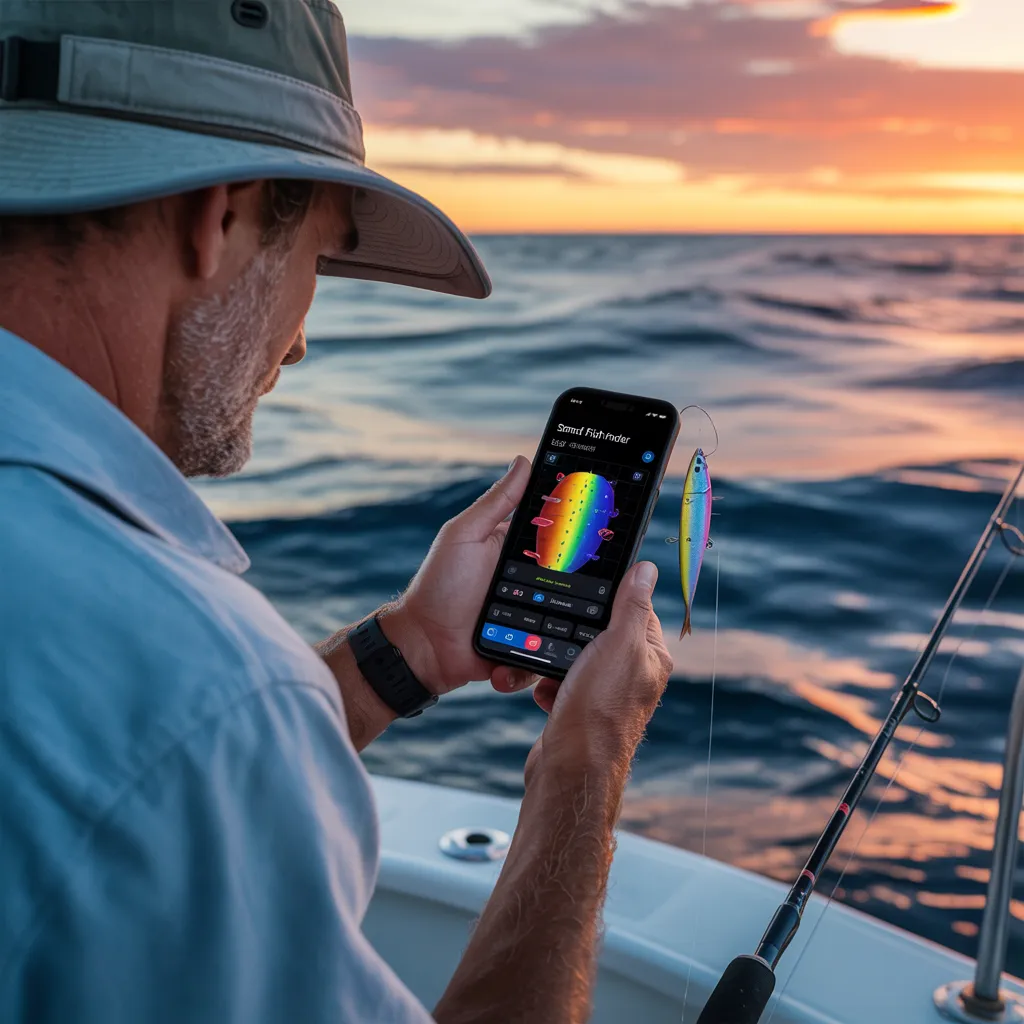
Indeed, numerous phone apps complement classic fish finders by offering up-to-date information, map functions, and shared knowledge. These tools elevate the fishing experience, helping users locate hotspots and monitor conditions with greater accuracy.
How Frequently Should I Update My Fish Finder Software?
Experts recommend updating fish finder software at minimum once a year or each time a new version becomes available. Consistent updates improve functionality, improve accuracy, and ensure compatibility with evolving technology, ultimately enhancing the overall fishing experience for users.